
Admissions
Portfolio for design and architecture admission
How to select projects, show the development of an idea, prepare the file and check the exact requirements of each course before submission.
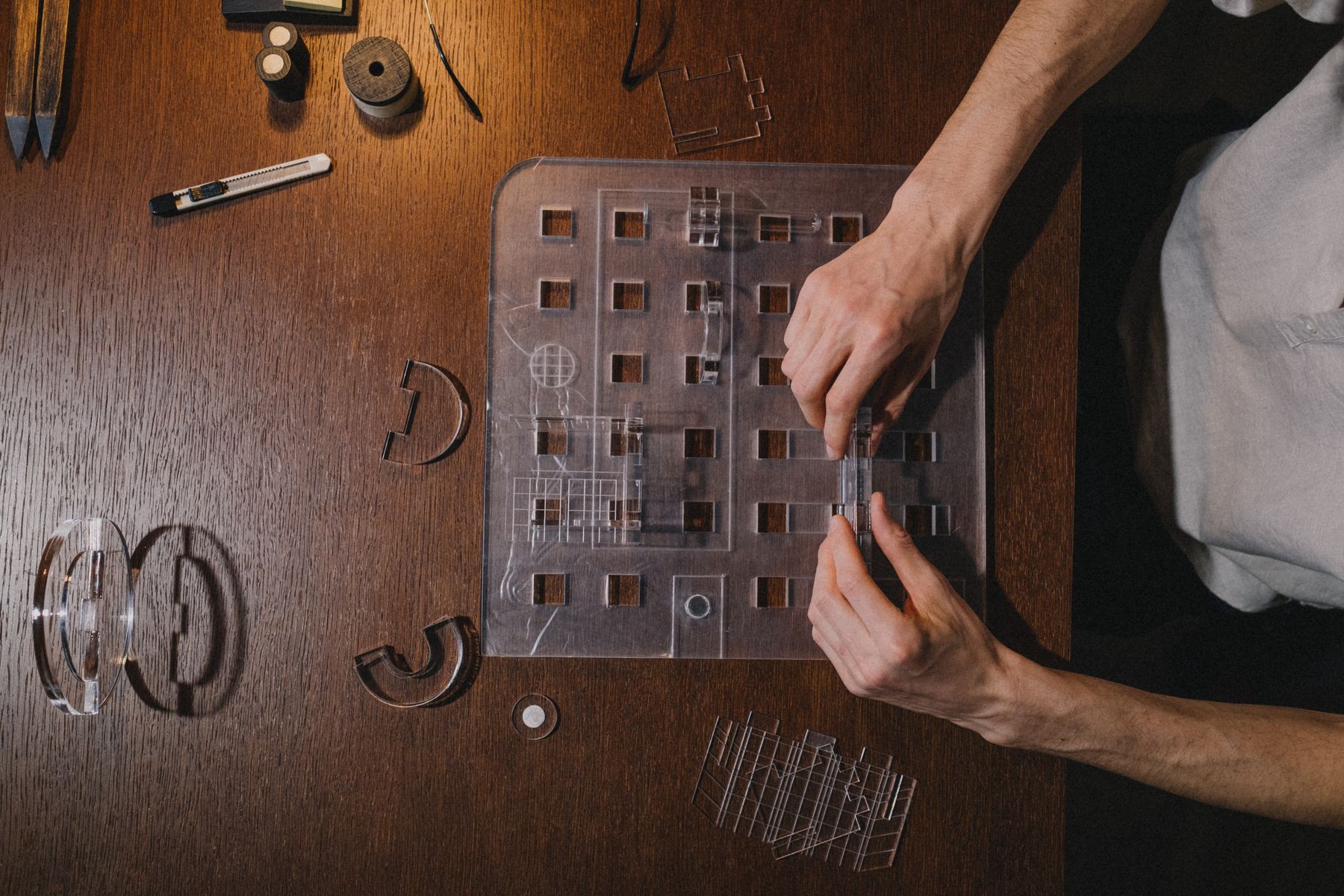




What an admission portfolio needs to show
A strong portfolio for university admission is a selective story about how you think. It should show observation, research, experimentation, decisions and reflection—not only polished final images. A creative portfolio for university answers four questions: what interests you, how you develop an idea, which tools you use and why your experience fits the course.Start with the course portfolio requirements
There is no universal template. Read the current portfolio requirements for the exact course, intake and year before designing the file. Record the accepted format, page or project limit, file size, deadline, authorship rules and whether an interview or task follows. The Royal College of Art portfolio guidance links selection directly to the chosen programme. Also check the general entry requirements for studying abroad.What to include in a portfolio
When deciding what to include in a portfolio, choose each project for the evidence it adds: observational drawing, spatial thinking, material tests, typography, user research, prototyping or an independent point of view. A smaller personal project can be more revealing than a highly graded assignment. Do not fill a page limit with repeated or weaker work.How to show creative process
Applicants asking how to show creative process should present a readable chain of decisions: starting question, research, alternatives, tests, mistakes, revision and outcome. University of the Arts London recommends showing research, planning, experimentation and development; University for the Creative Arts also values early ideas when they explain the applicant’s thinking.Portfolio structure from first page to last
A clear portfolio structure opens with relevant, confident work, groups research and outcomes by project, and ends with a memorable project. Keep margins, captions and navigation consistent. Portfolio examples for university can help you understand pace, but copying another applicant’s grid or visual identity makes your own thinking less visible.Design portfolio for university
A design portfolio for university should explain the brief, audience, constraints, alternatives, prototype and reason for the final decision. For graphic design, show composition, typography and communication systems rather than a collection of isolated logos. Compare study-abroad subject options and review relevant courses in the international university catalogue.Architecture portfolio for university
An architecture portfolio for university can demonstrate spatial awareness, scale, light, material, models and three-dimensional thinking. Professional drawings are not always required. The University of Cambridge architecture guidance asks for evidence of creativity, not only architectural work. For the 2027 Cambridge Architecture cycle, the course page specifies up to six A4 pages and a file under 15 MB; those figures must not be applied to other universities.Captions, authorship and collaborative projects
A useful caption states the brief, year, medium, scale, stage and your role. For team projects, distinguish your contribution from shared decisions. Transparent authorship matters: never present another person’s work as your own, and include only material you can explain confidently in a portfolio interview.Portfolio presentation and PDF checks
Good portfolio presentation supports the work instead of competing with it. Use a restrained grid, readable type and consistent image treatment. If the course asks for a PDF portfolio, export at the required dimensions and size, reopen the final file, check every page at laptop scale and test all links without private access.Preparing for a portfolio interview
For a portfolio interview, keep the submitted version and practise explaining each project in two minutes: the problem, research, key change and what you learned. Prepare to discuss a failed test honestly. Review the course again and bring questions that show informed interest rather than generic enthusiasm.Common portfolio mistakes
The most common mistakes are using one generic file for every university, starting with weak work, showing only final outcomes, hiding authorship, overcrowding pages and missing the stated upload method. A good answer to how to make an admission portfolio is therefore practical: follow the course brief first, edit ruthlessly and verify the submitted file.Final portfolio checklist before submission
Before uploading your portfolio for studying abroad, confirm that the course name and year are correct, the strongest projects frame the selection, process appears only where relevant, captions are accurate, team roles are clear, the file opens, links work, the deadline and time zone are recorded, and a copy of the submitted version is saved. GUGA Education can help you compare the portfolio task with the rest of your application documents and build a realistic admissions plan.Official sources for checking portfolio rules
Requirements change between admissions cycles. Reopen the programme page and applicant portal before submission. Use the official guidance from the Royal College of Art, University of the Arts London, University for the Creative Arts and the two Cambridge pages cited above.Frequently asked questions about admission portfolios
How many projects should a portfolio contain?
There is no universal number. Follow the course limit; if none is given, include only projects that add new evidence.
Should unfinished work be included?
Yes when the course asks to see process. If it requests finished projects only, follow that instruction.
Can I use the same portfolio for several universities?
A core selection may overlap, but order, length and emphasis should be adapted to each course.
Are professional architectural drawings required?
Not always. Many undergraduate courses assess creative and spatial potential. Check the exact course requirements.
How can I create a portfolio without design experience?
Use observation, personal projects, drawings, models and material experiments. Clear editing matters more than decoration.
Can I include a team project?
Yes, if your own role, contribution and the shared decisions are stated clearly.
Can I submit a website instead of a file?
Only when the course explicitly allows it. Otherwise use the required format and upload method.
When should I start preparing?
Start early enough to research requirements, improve weaker projects, photograph work well and test the final file before the deadline.