
ARCHITECTURE · ACCREDITATION · 2027
Studying Architecture Abroad in 2027
How to choose a country, professional degree and accredited programme that can lead towards architect registration
Choose the country of future practice first. The right programme is the one whose accredited degree, studio culture, language and full cost fit your route.

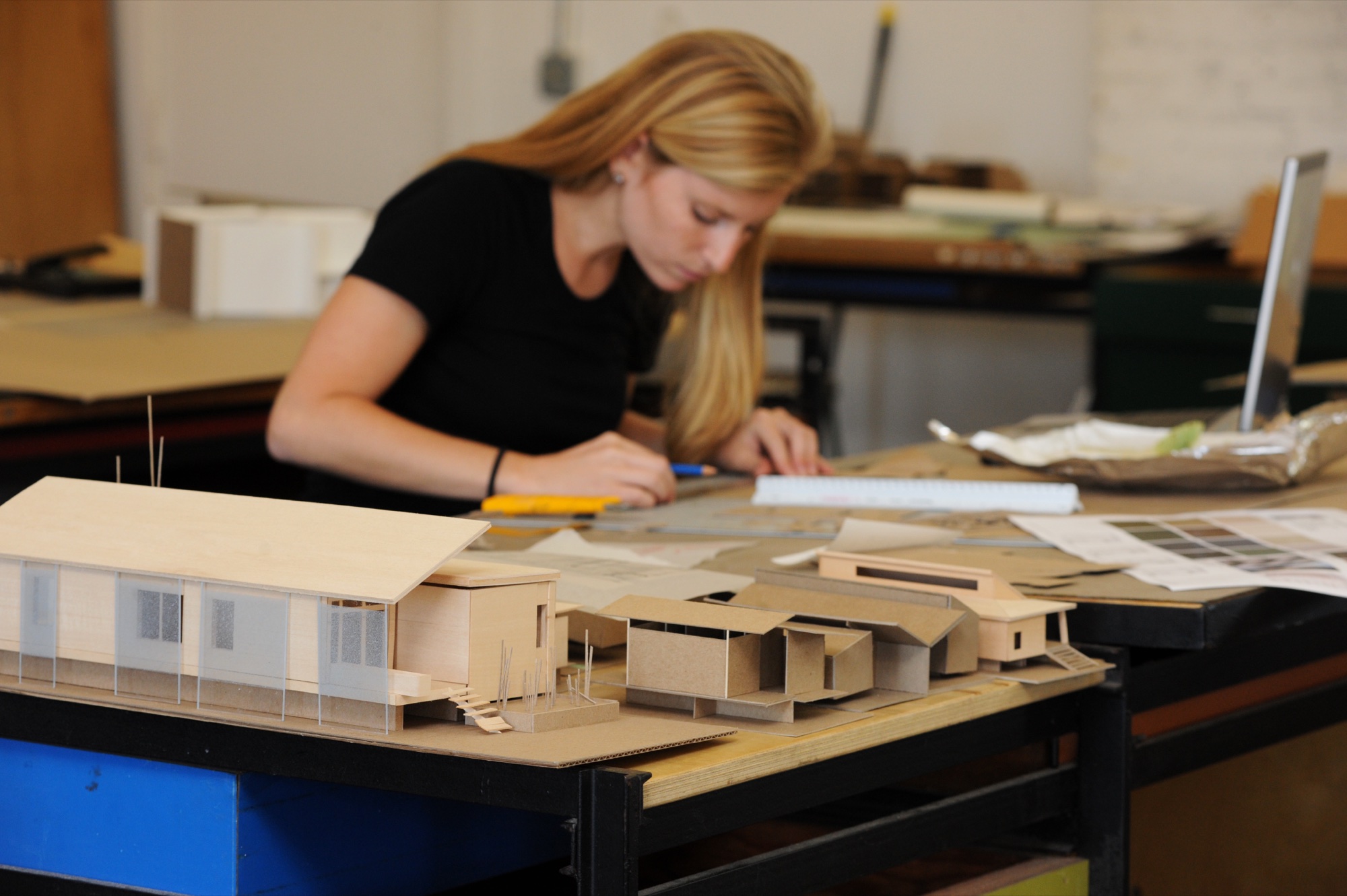



Architecture offers a rare combination of creativity, technology and public responsibility. Students do far more than shape buildings: they learn to read cities, understand structures and materials, design for real people, defend their decisions, and account for climate, safety, accessibility and budgets. That is why choosing architecture education abroad requires closer scrutiny than simply comparing rankings or campus photographs.
The most difficult distinction is often hidden in degree titles. A Bachelor of Architecture (BArch), a BA Architecture, a BSc Architecture and a Master of Architecture (MArch) may look similar in a prospectus but carry different professional status. One programme may complete an educational stage on the route to architect registration; another may provide only a pre-professional foundation; a third may be a research specialism for people who already hold a professional qualification. Studying in English does not in itself guarantee that the degree will be recognised in the country where a graduate later wants to practise.
This guide explains how to study architecture abroad in 2027: how to choose a country and university, understand the difference between BArch and MArch, verify accreditation, prepare for admission and calculate every stage and cost on the route into the profession. It is written for international applicants regardless of nationality or country of residence. If you are considering an architecture degree abroad for 2027 entry, always confirm the specific requirements with both the university and the professional regulator in the country where you may eventually practise.
1. The short answer: choose the country of practice before the university
If you want not only to study architecture but eventually to use the title architect and practise with independent professional responsibility, begin with the country in which you may want to work. Find its official regulator, then check the education requirement, practical experience, examinations and registration process. Only after that should you draw up a university list.
That is also the right way to answer the question of how to become an architect abroad: do not search for a single “international degree”; build the required sequence within a particular professional system.
There is no universal “best country” for architecture. The right choice depends on five things:
- Professional objective. Do you want to become a registered architect, work in a practice without signing authority, or move into urban design, environmental design, architectural technology or research?
- Future country of practice. Its rules determine which degree and later stages carry professional weight.
- Status of the exact programme. Accreditation applies to a named programme for a defined period, not to an attractive university name in general.
- The complete route. Count not only undergraduate years, but any master’s degree, experience, examinations and registration.
- The complete cost. Tuition fees sit alongside accommodation, model-making materials, printing, equipment, software, site visits, visas and professional stages after graduation.
Where GUGA helps. We turn the broad wish to “train as an architect abroad” into a verified route: clarify the country and professional objective, check the exact programme in the official register, compare requirements, budget and duration, then build a realistic application plan. You can see the scope of this support in our study programmes abroad section.
3. What studying architecture abroad is really like
The design studio sits at the centre of most architecture programmes. Students receive a brief, investigate a place and its users, develop a concept, test alternatives, produce drawings, digital models and physical models, and then explain their decisions in public. This review is often called a critique or crit: a critical studio discussion in which tutors and visiting practitioners assess the project’s reasoning, not merely whether it produces an attractive image.
A strong course of architecture study abroad normally combines several layers:
- design for buildings and public space;
- history and theory of architecture and the city;
- structures, materials, building systems and regulations;
- climate responsibility, energy performance and building life cycles;
- hand drawing, model-making, visual communication and digital tools;
- work with real contexts, research and evidence-led defence of decisions;
- professional ethics, contracts, project management and an architect’s responsibilities.
This is intensive study with a substantial amount of independent work. Before choosing a programme, look beyond the module list to its studio culture: how many projects students undertake, how often they receive feedback, who teaches, whether workshops and laboratories are available, and how safe access is organised. Exhaustion is not evidence of quality. A well-run school teaches students to manage a complex process instead of romanticising sleepless nights.
When reviewing student work, ask not “Do I like this style?” but “How different can responses to the same brief be?” If every project looks as though it came from one author, the school may impose a narrow aesthetic. If students can show research, failed attempts, technical testing and a convincing final result, that suggests mature teaching.
Conditions absent from the promotional film matter too. Does every student have a permanent workspace? How long are the workshops open? Does staff provide safe-equipment training? What is the student-to-tutor ratio in studio? How are international students supported through the first semester? Is there access to materials, a standards library, digital fabrication and structural advice? The answers directly shape the quality of day-to-day study.
The assessment system is equally revealing. Find out whether the mark rests on one final review or develops over the semester; how feedback is recorded; whether a result can be appealed; and how the school approaches authorship, teamwork and generative artificial intelligence. For a future architect, a transparent process matters more than a spectacular exhibition of a few top projects.
4. Undergraduate and postgraduate architecture: BArch, BA, BSc and MArch
One of the most common mistakes is to assume that every undergraduate or master’s architecture course is interchangeable.
When comparing undergraduate and postgraduate architecture routes, first establish which stage your previous education already covers. An undergraduate architecture degree can be professional or pre-professional; a postgraduate architecture degree can be professional, conversion-oriented or post-professional. The practical question is not simply BArch or MArch, but what the exact award does in the intended system.
BArch — Bachelor of Architecture — is a professional undergraduate architecture degree in systems where the exact award is formally accredited. In the United States, an accredited BArch normally takes five years and satisfies the education requirement for licensure, although experience, examination and the decision of the individual jurisdiction remain separate stages.
BA or BSc in Architecture — Bachelor of Arts or Bachelor of Science in Architecture — may form the first part of a professional route, but in many countries it is pre-professional and must be followed by an accredited MArch or another qualification. A four-year BS Architecture in the United States, for example, is not equivalent to the five-year professional BArch.
MArch — Master of Architecture — is a postgraduate architecture degree, but the letters MArch do not prove professional status. There are accredited professional MArch programmes for applicants with either relevant or unrelated previous education, as well as post-professional master’s courses for people already qualified as architects. In Canada, every currently accredited professional programme awards an MArch, yet not every Canadian master’s degree containing the word architecture is accredited.
| Your starting point | Possible education route | What to verify before applying |
|---|---|---|
| After secondary school | Professional BArch, or a pre-professional bachelor’s followed by an MArch | Whether that exact sequence satisfies the regulator’s education requirement |
| After a relevant bachelor’s | MArch of shortened or standard duration | Which previous modules and portfolio evidence the university accepts; whether the MArch is professional |
| After a bachelor’s in another subject | An MArch for applicants without architecture education, often longer | Whether the programme accepts unrelated graduates and which foundation modules are required |
| After a professional architecture degree | Post-professional master’s or specialist study | Whether you need another professional degree or instead want research and deeper practice |
5. Programme accreditation matters more than an overall ranking
Institutional reputation and subject rankings can help create a longlist, but they do not answer the central professional question: does the regulator recognise this exact course as an educational stage towards registration? Accreditation of an architecture programme is an official assessment against professional standards; it is not the same as accreditation of the university as a whole. That is why architecture degree accreditation must be checked at programme level.
The check should be literal:
- Open the website of the country’s official regulator or accreditation body.
- Find the exact university, programme and degree title.
- Check the campus, study mode and period for which the status is valid.
- Establish what completion actually provides: the education requirement, access to practical training, eligibility for an examination, or only an academic award.
- Check the later stages—experience, professional examination, language, membership or registration.
- Save the link and date of the check, then repeat it before enrolment.
In the United States, the current list is maintained by the National Architectural Accrediting Board — NAAB; in Canada, by the Canadian Architectural Certification Board — CACB. In the United Kingdom, accredited qualifications are listed by the Architects Registration Board — ARB, while in Australia applicants should use the live list from the Architects Accreditation Council of Australia — AACA.
GUGA’s practical principle: our comparison table records not just the university, but the precise degree, accreditation body, validity period, next professional stage and verification source. This protects an applicant from assuming that an appealing English-taught programme leads to an outcome it was never designed to provide.
An official accreditation page often contains more useful information than a university’s promotional description. Read it as a professionally consequential record of the programme.
| Register field | Why it matters | Dangerous assumption |
|---|---|---|
| Exact degree title | One university may offer both a professional and a non-professional MArch | “If the university is accredited, all its architecture degrees are accredited” |
| Campus and mode | On-campus status may not extend to another campus or a distance format | “The name is the same, so the outcome must be the same” |
| Accreditation date or term | Status can change and transition rules can depend on the graduation year | “The university website once described it as accredited” |
| Type of professional outcome | Accreditation may cover only education, not experience, examination and registration | “The degree automatically grants a licence” |
| Conditions and review reports | These reveal conditions, transition status, strengths and problem areas | “A ranking position explains the quality of professional preparation” |
If a programme is still applying for accreditation or carries candidate, applicant or seeking-accreditation status, do not treat that as final approval. Ask the university to explain in writing what status your cohort’s award will have, what happens if accreditation is refused and whether a protected alternative route exists. Confirm the final answer with the accrediting body.
6. Comparing professional systems and countries for 2027
The table below is not a ranking of the best countries to study architecture. It is a map of professional systems as at 27 August 2026, showing why the same degree title can have different weight.
You should consider the best countries for architecture only after setting your own criteria: future market of practice, language, accreditation, complete budget and intended type of degree.
| Country or system | Professional education reference point | Parallel or subsequent professional stages | Applicant’s principal check |
|---|---|---|---|
| United Kingdom | During reform: an accredited ARB qualification at master’s level plus a practice-level qualification, or a combined programme; transition from the previous model continues in parallel | Demonstration of competence and ARB registration; experience conditions depend on route and transition status | Exact ARB status and the framework under which your cohort will study |
| United States | NAAB-accredited BArch, MArch or DArch | Architectural Experience Program (AXP) experience can be accumulated during or after education; then the Architect Registration Examination (ARE) and licensure in the particular jurisdiction | Whether the programme appears in the NAAB directory and what extra rules the target jurisdiction applies |
| Canada | Every currently professionally accredited programme awards an MArch | CACB academic certification, the Internship in Architecture Program (IAP), examination and provincial or territorial registration | Whether the MArch appears in the CACB register; an undergraduate title alone does not complete the educational route |
| Australia | The accredited professional qualification is normally an MArch following a defined undergraduate stage | Practical experience, the Architectural Practice Examination and state or territory registration | Current AACA status and the route of entry to the MArch |
| European Union | BArch or MArch labels do not provide a universal test; national status and professional-recognition rules matter | Application to the competent body in the country of practice; automatic or general recognition only under defined conditions | Whether the profession is regulated, whether the qualification appears in the necessary list, and which rules apply to your citizenship |
This matrix cannot replace an individual check. Professional, pre-professional and research programmes may coexist within one country, while rules for a foreign degree can differ from those for a local graduate.
When choosing between countries, first remove routes that do not fit your professional objective or budget. Then compare teaching and environment. One applicant may need an English-taught undergraduate degree with direct entry after school; another may want access to a professional MArch after an unrelated degree; a third may prioritise transferability between countries.
Do not compare “cheaper” routes without using the same unit. Five years in a city with moderate tuition may cost more than a shorter route with a higher annual fee. Likewise, “taught in English” does not mean English will be enough for placements, building regulations or registration. The country needs to suit not just a first-year student, but the future professional too.
7. Architecture in the United Kingdom: the important 2026–2028 transition
In the United Kingdom, architect is a protected professional title: it may be used in practice by someone registered with ARB. ARB expressly distinguishes a university qualification from the right to use the title.
For 2027, the UK route cannot be described by the old formula without qualifications. ARB is moving from the system usually presented as Part 1, Part 2 and Part 3 to a competence-outcomes model. Under the current ARB initial education and training framework, the typical route through UK qualifications comprises:
- an accredited master’s-level qualification demonstrating academic outcomes;
- an accredited practice-level qualification demonstrating practice outcomes;
- or one combined accredited qualification.
The transition is due to finish by December 2028, but applicants must read the status more precisely than “accredited”. Older Part 1, Part 2 and Part 3 qualifications need the appropriate prescribed status on the date of award. For new master’s-level and practice-level qualifications, Schedule 1 of the ARB rules requires accreditation before a student starts or transfers onto the course, and accreditation to remain in place on the award date. A 2027 applicant should therefore obtain a written answer explaining which framework applies to their exact cohort.
In its guidance for students and trainees, ARB says the new system moves away from a universal minimum-two-year experience requirement, but it does not remove practical learning or assessment of professional competence. A candidate following the outgoing Part 3 route should generally still expect to evidence 24 months of practical experience; under a new practice-level qualification, the accredited structure of that programme determines the format.
ARB also plans to open Route P in spring 2027: holders of accredited Part 2 and Part 3 qualifications will be able to apply without an accredited Part 1. The former Part 1 Prescribed Examination ends after 2026. This is a planned change, so applicants in 2027 must recheck the live rules and launch date on the ARB website.
The Royal Institute of British Architects (RIBA) is a professional membership organisation. Its validation can be an important sign of quality, but RIBA’s own procedure makes clear that it does not replace ARB accreditation and does not confer UK registration. Check both statuses separately for education and future practice, and do not rely on outdated route descriptions on third-party websites.
8. Studying architecture in the United States: BArch, MArch, AXP and ARE
The United States has no single national architect licence. Authority to practise comes from an individual jurisdiction—a state, the District of Columbia or another US territorial jurisdiction—and the common route combines education, experience and examination. The National Council of Architectural Registration Boards (NCARB) explains that most jurisdictions rely on a NAAB-accredited professional degree, although some permit alternative education routes.
The official NAAB guide for prospective students distinguishes three professional degrees:
- BArch — a five-year professional undergraduate degree;
- MArch — commonly around two years after a four-year pre-professional architecture degree, or around three years after an undergraduate degree in another subject; exact duration depends on the programme;
- DArch — a professional doctoral degree available in a very limited number of programmes.
During or after education, candidates complete the Architectural Experience Program (AXP), a structured practical-experience programme. Under current NCARB requirements, it comprises 3,740 hours across six experience areas. Eligible experience can be recorded after secondary school, although jurisdictions may impose extra rules. Candidates then take the six-division Architect Registration Examination (ARE), and the relevant jurisdictional board makes the licensing decision.
The conclusion for an international applicant is straightforward: do not confuse a four-year BA or BS Architecture with an accredited BArch. If you intend to practise in the United States, verify the programme with NAAB and the chosen jurisdiction’s requirements through NCARB before investing in the degree.
Also check whether the programme offers the Integrated Path to Architectural Licensure, through which AXP and divisions of the ARE can be combined with university study. It is not a universal fast track and does not guarantee a licence, but it can change the overall schedule for a disciplined candidate. Compare the actual sequence of requirements in your jurisdiction, not a promotional promise of a “faster route”.
If you already hold a foreign architecture degree, do not assume another US degree is always the only option. NAAB provides Education Evaluation Services for Architects — EESA, assessing foreign education against the NCARB education standard, but the licensing board decides whether that route is acceptable. Choose the jurisdiction, check its rules and only then decide whether further study is necessary.
9. Canada and Australia: the professional route at master’s level
In Canada, the CACB is the only body recognised by the architecture profession to accredit Canadian programmes. Every currently accredited programme in Canada awards an MArch. Undergraduate architecture education is therefore normally a pre-professional foundation, with the professional education outcome completed through an accredited master’s programme.
According to the CACB explanation of professional-degree eligibility, an MArch often takes at least two years after a four-year relevant pre-professional degree, or at least three years after a bachelor’s in another field. After an accredited MArch, graduates proceed to academic certification, the Internship in Architecture Program (IAP), a professional examination, and registration in a province or territory. The Regulatory Organizations of Architecture in Canada (ROAC) describes IAP as a structured minimum of 3,720 hours; depending on the jurisdiction, up to 760 hours may be considered while the candidate still holds formal student status, and local rules must be checked separately.
In Australia, the conventional route likewise proceeds through an accredited MArch after a relevant undergraduate stage. Candidates then acquire practical experience, complete the Architectural Practice Examination and apply to the registration board in a state or territory. AACA sets out separate pathways for local graduates, holders of overseas qualifications and experienced practitioners. For examination eligibility, AACA currently requires 3,300 hours of experience, of which at least 12 months must follow completion of an accredited or assessed qualification; details are on the current Architectural Practice Examination page.
In both countries, the word master’s is not enough. Applicants need the exact professional MArch in the current official list, not just any postgraduate programme with architecture in its title.
Different procedures apply to a foreign qualification and to a local accredited degree. In Canada, CACB assesses education through the appropriate academic-certification route. In Australia, AACA offers Overseas Qualifications Assessment. A positive assessment allows the candidate to move to the next stage, but is not itself professional registration. That distinction is critical for someone who already studied architecture and is considering a master’s merely as a way to “validate the diploma”.
10. Studying architecture in Europe: degrees, regulated professions and recognition
Europe is not one admission or registration system. Italy, Germany, the Netherlands, Spain, Czechia and other countries have their own university structures, languages, professional chambers, state examinations and rules governing the title. A search for “architecture schools in Europe” should therefore begin with the country of intended practice and its national competent authority, not an arbitrary top-ten list.
Within EU law, Article 46 of the current consolidated Directive 2005/36/EC defines minimum architectural training as at least five years of full-time university study, or four years of study plus two years of professional traineeship. However, the number of years—or 300 European Credit Transfer and Accumulation System credits (ECTS), the European measure of student workload—does not alone prove automatic professional recognition.
For automatic recognition in cases covered by the Directive, the candidate needs a specified qualification listed in Annex V and the accompanying documents, and must still apply to the competent body in the destination country. The European Commission explains the automatic-recognition mechanism. If the qualification does not meet those conditions, the general system may apply, potentially with an aptitude test or adaptation period.
The Directive’s rules are principally addressed to citizens of the EU and European Economic Area. The European Commission separately explains that third-country nationals are generally subject to national procedures unless a special status or agreement provides otherwise. An international applicant must therefore check both the degree and their personal legal position. The European Commission regulated-professions database provides a starting map of professions, authorities and contacts.
In practice, two five-year European degrees are not necessarily equally portable. Ask the university not only “Does the programme follow the Bologna Process?” but “Which body recognises this exact qualification for access to the profession, under what precise title does it appear in the official list, and which supporting documents does a graduate receive?” The answer “it is worth 300 ECTS” is useful academic information, but an insufficient professional guarantee.
Recognition of a foreign architecture degree must always be checked in the destination country: a university cannot guarantee in advance what a different national regulator will decide.
If an undergraduate programme is taught in English in a country with another official language, separately check the language used in studio tutorials, technical regulations, placements and professional examinations. An international programme may work well as an academic degree while the local professional route demands a much higher command of the national language.
11. Applying for architecture abroad: documents and academic requirements
Admission requirements vary by degree and country, but a university usually evaluates four things: academic readiness, creative thinking, ability to study in the programme language and motivation for this particular route. Applicants researching architecture programmes taught in English should separate the language of instruction from the programme’s professional status.
After secondary school, the application may require:
- a school-leaving certificate and transcript with official translations;
- specified school subjects or minimum grades;
- evidence of proficiency in the teaching language;
- a portfolio, creative task or interview where the programme requires one;
- a motivation statement, reference or short application answers;
- a foundation year if previous schooling does not allow direct academic entry or the applicant lacks creative preparation.
For an MArch, a university may additionally require a relevant bachelor’s degree, a list of completed studio and technical modules, a portfolio of university work, an academic CV, references and a record of professional experience. Programmes for candidates with an unrelated bachelor’s assess potential differently and often have a longer curriculum.
If previous education was completed in another country, distinguish three kinds of fit. Academic eligibility determines whether the credential permits entry at the chosen level. Subject fit asks whether earlier studio, technical and humanities modules are sufficient. Professional recognition concerns progression towards architect registration. A university may accept a degree academically, while a professional regulator later assesses it differently.
Transferring between architecture programmes also requires care. Because studio modules build sequentially and accreditation conditions matter, the new university may award fewer credits than the student expects or offer entry at an earlier stage. Before leaving a current place, request a written preliminary credit assessment, the proposed curriculum after transfer and confirmation of how the move affects the degree’s professional status.
Mathematics, physics and visual art may be preferred or compulsory at individual universities, but there is no global subject rule. The same is true of standardised tests. Begin with the official page for the exact programme and use our complete application-document checklist and guide to international admission requirements to understand the wider document package.
12. Architecture portfolio requirements: when a portfolio is needed
A portfolio is common, but not universal and never has one standard format. One university requests a PDF selection, another imposes a page limit through a digital upload, a third adds a creative task or interview, while some entry-level courses do not require prior architectural work at all.
Its purpose is to show how the applicant observes, investigates and tests ideas; works with form, space and materials; and communicates a process visually. An admissions team does not expect a school student to resemble a finished professional practice. It is far more important to show development of thought, authorship, editorial judgement and an honest account of collaborative work.
Do not make one “universal” portfolio before collecting every programme’s instructions. Start with a matrix covering format, maximum file size, number of pages or works, permitted media, submission method, captions, deadline and rules for artificial intelligence. Then adapt the material for each application.
When comparing requirements for an architecture portfolio, use the page for the exact degree and cohort rather than random examples on social media. Search formulations such as requirements for a portfolio for architecture study can lead to generic advice; the university specification remains decisive.
GUGA’s separate step-by-step guide explains how to prepare a portfolio for design and architecture admission: selecting work, showing process, building a sequence, identifying your own contribution and preparing the file for upload.
13. Teaching language, drawing and technical readiness
An English-taught architecture programme may require IELTS, TOEFL or another test, or accept specified evidence of previous study in English. There is no single architecture score: each university sets its own threshold, while visas and professional registration may carry separate language rules. Check the overall minimum, component requirements, result validity and the final date for submitting evidence.
The phrase architecture programmes taught in English describes only the language of the course, not its professional status. Establish the programme status first, then check language conditions for admission and eventual practice.
Even on an English-taught degree, the local language can be important in practice—for communicating with clients, builders and public authorities, reading regulations and working on site. A degree in English does not remove that reality.
Professional drawing ability is not a universal prerequisite. Architecture uses drawing as a tool for observation and thought, not only as an artistic display. Spatial reasoning, attention to scale, awareness of relationships between people and environments, patience with iteration and the ability to justify a decision are often more useful than a “perfect hand”.
Technical preparation is not mastery of one application either. A university may teach computer-aided design (CAD), building information modelling (BIM), 3D modelling, visualisation and digital fabrication. Applicants do not need to know everything in advance, but should be comfortable organising files, working with graphics, understanding basic geometry and planning time for complex projects.
14. The full cost and duration of becoming an architect
Comparing annual tuition alone distorts the decision. One route may have a lower tuition fee yet require an extra foundation year, a longer master’s degree or expensive city living. Another may cost more each year but reach the professional stage sooner. Calculate the complete route to your goal, not the price of one semester.
The cost of studying architecture abroad includes every educational and professional stage, not only the figure at the top of a university fee page.
| Category | What to include in the budget | What to ask the university |
|---|---|---|
| Tuition | Fees for each year, deposit, student charges and possible annual increases | Whether the international fee is fixed and what it includes |
| Studio work | Model materials, printing, plotting, laser cutting, workshops and protective equipment | Which resources are free and which students pay for separately |
| Technology | Laptop, storage, software, repairs or equipment hire | Minimum technical specifications and available education licences |
| Living and mobility | Accommodation, transport, food, health insurance, visa and site visits | Whether accommodation is guaranteed and which study trips are compulsory |
| Professional progression | The next degree, practical experience, examinations, foreign-degree assessment and registration fees | What the next stage is and whether graduates may work while completing it |
There is no universal duration for an undergraduate or postgraduate architecture degree abroad. In the United States, the professional BArch normally takes five years; an MArch often takes two years after a relevant four-year education or three years after an unrelated degree. Canadian and typical Australian routes normally complete professional education at MArch level. The United Kingdom is moving between models, and both national rules and the Directive’s minimums operate in the EU. Years of practice and examinations may remain after graduation.
When looking for funding, check eligibility by citizenship, degree and entry year; whether an award covers only tuition; and whether it can be combined with other support. Our guide to scholarships and grants for study abroad provides a starting method, but every amount and deadline must be verified on the official competition page.
15. Architecture schools abroad: evaluating a programme without blind faith in rankings
A ranking can be an initial filter, but it is not a complete answer to where one should study architecture abroad. A university’s overall position often reflects research, international reputation, citations or employer opinion. It does not show whether the required degree is professionally accredited, how the studio works, how much feedback students receive or the full cost of reaching registration. The same caution applies when browsing architecture schools abroad through commercial league tables.
Compare evidence rather than logos. For every programme, collect the same set of materials: the official degree page, the accreditation-register entry, curriculum, work by students in several years, workshop description, assessment rules, placement information and support for international applicants. If the school publishes a professional review report, read the observations and next-review date as well as the conclusion.
| What to compare | Strong evidence | A useful question |
|---|---|---|
| Professional status | The exact degree in the regulator’s live register | Which educational stage towards registration does this programme complete for the 2027 cohort? |
| Studio teaching | Work from different students, project briefs, regular reviews and transparent criteria | How often does a student receive individual feedback, and from whom? |
| Technical depth | Structures, materials, environment, regulations and integration of technical decisions into studio | Are projects tested structurally and environmentally, not only visually? |
| Workshops and digital resources | Published access hours, safety training, equipment and staffing | Which materials, printing and digital fabrication are included, and what costs extra? |
| Practice and live work | A clearly described placement, live project or cooperative-education format | Is practice guaranteed, competitively allocated or only recommended? |
| Graduate outcomes | Method, period, respondent count and actual role titles | Do the data relate to this exact degree or the whole faculty? |
| Student support | Academic advice, wellbeing, accessibility, careers and language help | What is genuinely available to an international student in the first year? |
Look at the curriculum sequence. In a strong programme, studio does not sit apart from technical and humanities subjects: knowledge of structures, climate, history, society and professional responsibility returns to the design decisions. If the website shows only dramatic visualisations without explaining how a student moves from investigation to a tested project, ask for further evidence.
Compare freedom of choice separately. Electives may allow deeper work in computational design, conservation, housing policy, circular economy, landscape or urban design. A long electives list does not compensate for weak core preparation, however. First establish that the programme provides a coherent professional foundation, then evaluate its specialisms.
Speak to people beyond the admissions representative. Request contact with a student or graduate, attend an open review and ask several people the same questions. What does a normal week look like? How much do models and printing cost? Is it realistically possible to use the workshop during peak weeks? Do tutors offer conflicting feedback, and how do students work with it? These answers often reveal everyday quality better than a promotional tour.
Finally, separate intellectual interest from professional outcome. A celebrated experimental school may be ideal for a student exploring new forms and media, but not the most direct route to registration in a particular country. A less famous accredited programme with a strong studio, accessible workshops and a realistic budget may suit the personal objective better. That is how to make a strong choice of architecture school abroad—through fit, not somebody else’s “top ten”.
16. Careers after architecture study: degrees, professional titles and international mobility
An architecture degree opens a field wider than one job title. Graduates work in design practices, development, urban planning, research, building technology, visualisation, project management, sustainable transformation of buildings and digital modelling. The right to use the protected title architect and assume legally defined professional responsibility, however, depends on registration in a particular country.
Early-career job titles can mislead. An architectural assistant or junior architectural designer may work on drawings, models and coordination under senior supervision without yet being a registered architect. A BIM coordinator manages building-information-model data and processes. An architectural technologist focuses on technical development and delivery. An urban designer works with neighbourhoods and public space. Each role carries a different balance of design, technical work, responsibility and possible professional requirements.
| Career direction | What to seek in the programme | What not to assume |
|---|---|---|
| Registered architectural practice | Professional accreditation, integrated technical modules, practice, ethics and a route to the examination | That a university degree alone grants the professional title |
| Design in an international practice | Strong studio work, team projects, communication, digital and physical models | That English is sufficient for every local rule, client and construction process |
| BIM and digital design | Information modelling, coordination, parametric tools and data culture | That knowing one software package replaces architectural thinking |
| Sustainability and retrofit | Building physics, materials, life cycle and adaptive reuse | That the word sustainable in a module title proves depth |
| Urbanism and research | Urban theory, spatial data, community work, policy and research methods | That an architecture licence is automatically required or automatically granted for these roles |
| Development and management | Project economics, contracts, planning, negotiation and interdisciplinary coordination | That a design portfolio alone demonstrates commercial competence |
When checking graduate employment, examine the method. An “employed” percentage says little unless the school explains the collection period, number of respondents, whether jobs relate to architecture and whether roles are temporary, internships or permanent posts. A more reliable picture combines programme statistics, graduates’ professional status, employer types and real career paths.
International mobility has at least three distinct levels. Academic recognition enables further study. Professional recognition determines whether the regulator credits your qualification towards registration. Immigration permission determines whether you may live and work in the country. A positive answer at one level does not guarantee the other two. A university might accept a foreign degree for master’s admission, for example, while a professional body requires a separate assessment and an employer still needs a candidate with the appropriate right to work.
If you are unsure where you will live after graduation, favour a route that can be documented clearly. Keep module descriptions, learning outcomes, academic hours or credits, studio briefs, evidence of experience and the accreditation status at the time of completion. These materials can matter during recognition of a foreign architecture degree in another country.
The portfolio changes function after university too. For admission it shows potential and thought process; for an employer it shows professional role, technical depth, ability to work in a team and capacity to carry a project to the required stage. During your degree, record your own contribution, project versions, decisions made after critique and the link between concept and delivery. This helps both with job searches and future professional-experience records.
GUGA does not promise a licence or employment; doing so would be misleading. Our role is to connect education with the intended career before an application is made: decide whether a professional degree is required, verify its status, assess route portability, language, complete budget and realistic next steps. The applicant then chooses not an abstract “architecture diploma”, but a coherent route towards the work they want to do.
17. Building a programme shortlist and architecture application plan
A strong shortlist is not ten universities sorted by ranking. It is a small group of programmes for which you can explain the professional outcome, academic fit, financial realism and reason for selection.
Step 1. Fix the professional objective
Write down where you may want to practise and whether architect registration matters to you. If the country is undecided, select two or three systems and compare qualification portability, language and the full route.
Step 2. Map the degrees
For each country, draw the sequence from your current education to registration: foundation or direct entry, BArch or BA/BSc, MArch, experience, examination and professional body. Mark every point at which the route can branch.
Step 3. Verify each programme in the official register
Record the exact degree title, accreditation status, validity period, register link and date checked. Never transfer one programme’s status to the whole university.
Step 4. Match the admission requirements
List school subjects, equivalence of the leaving certificate or degree, portfolio, language, references, creative tasks, interview and deadline separately. If 2027 rules are not yet published, mark that as uncertainty instead of copying last year’s date.
Step 5. Calculate the complete budget and risks
Build at least a base and a conservative scenario. Add reserves for materials, technology, accommodation, currency movements and a possible extra year. Compare not only price, but offer conditions and the deposit-refund policy.
Step 6. Start preparing 12–18 months ahead
First choose countries and check accreditation; next establish academic eligibility and language; then plan the portfolio, documents and finance. The exact calendar depends on the university, so use only the current programme page for deadlines.
| Approximate time before study begins | Main work | Result of the stage |
|---|---|---|
| 12–18 months | Define the professional objective, countries and degree type; check accreditation systems | Route map and selection criteria |
| 10–14 months | Gather programmes; check academic eligibility, language, portfolio and complete budget | A balanced, evidence-backed shortlist |
| 8–12 months | Prepare the language test, creative practice, portfolio, translations and references | Main application components ready |
| 6–10 months | Adapt statements and portfolios; submit against actual deadlines | Complete applications without formal gaps |
| After offers | Compare conditions, accreditation, budget, deposit, visa and accommodation | An informed decision rather than a choice based on name |
These windows are planning ranges, not university deadlines. Some programmes close earlier, use several rounds or receive the portfolio separately from the main application. The official calendar for the exact intake always overrides a general plan.
How GUGA supports an application. We help build a balanced programme list, verify professional status and the 2027 rules, match admission requirements, plan a portfolio without replacing the applicant’s authorship, prepare documents and motivation materials, track deadlines and compare offers by full budget. Accreditation, recognition and professional registration decisions always belong to the relevant official body. To discuss your own route, begin with an admissions consultation or review how admission to an overseas university works.
Frequently asked questions
How many years does it take to become an architect abroad?
The question “how many years does it take to become an architect abroad” has no single answer. Professional education may consist of a five-year BArch or a bachelor’s–MArch sequence, followed after university by structured experience, a professional examination and registration. Calculate the complete route in the specific country, not only the first degree.
Which is better for an architect, BArch or MArch?
The exact programme’s status matters more than its title. An accredited BArch can be a professional first degree, whereas a BA or BSc often requires a later MArch. An MArch can likewise be professional or post-professional, so verify it in the regulator’s register.
Can I enter an MArch after a bachelor’s in another subject?
Yes. Some universities offer professional MArch programmes for applicants without previous architecture education. They are normally longer and may require a portfolio, creative preparation or specified foundation modules. Conditions depend on the programme.
Is a portfolio always required for architecture admission?
No. Portfolios are very common, especially for creative and master’s programmes, but they are not a global requirement. Check format, length, permitted work and authorship rules on each university’s course page.
Do I need to draw well to study architecture?
Professional artistic ability is not a universal admission condition. Spatial thinking, observation, developing an idea, working with scale and explaining decisions all matter. Drawing, model-making and digital tools develop during study.
Can I work as an architect in another country after graduation?
Potentially, but qualification transfer is not automatic in every case. The destination country may require degree assessment, additional experience, an examination, language evidence or an adaptation period. Check its professional regulator’s rules.
Is an English-taught architecture programme automatically professional?
No. Teaching language does not determine accreditation. An English-taught BA, BSc or MArch may be professional, pre-professional or research-oriented. Find the exact programme in the official accreditation register.
How is architecture different from architectural engineering?
Architecture focuses on spatial design, users, context and the synthesis of creative and technical decisions. Architectural engineering concentrates more heavily on structures and building-engineering systems. They are distinct education and professional routes, although they collaborate closely on real projects.