Music production · 2027
How to Become a Music Producer in 2027
Education, skills, portfolio and a career path without the myths
A practical guide to producer roles, musical and technical skills, education, portfolios, admissions, first collaborations, rights and a realistic career start.



A music producer turns an idea into a recording with character, structure and an emotional centre. The work may begin with a beat or a rough demo: finding the right key for an artist, reshaping an arrangement, organising a recording session, making hundreds of decisions about sound and bringing a track to the point where it is ready to meet an audience. In today’s industry, music production is creative, technical and deeply collaborative. That is why becoming a producer takes more than buying a laptop or completing a single software course.
If you are searching for how to become a music producer, start with the role you want to play, not the equipment you want to own. You might want to build electronic tracks independently, lead studio sessions with artists, write and arrange songs, produce vocals, create music for film and games, or combine music production with recording engineering. That choice should shape the course you take, the portfolio you build, your application and your first professional moves.
GUGA Education helps applicants make this route coherent: identify their strengths, compare music production courses abroad, check how their qualifications and English-language evidence will be assessed, plan a creative portfolio, and build a realistic budget and application calendar. We do not promise fame or guaranteed employment. We turn a vague ambition to “work in music” into an evidence-led admissions plan.
The short answer. To become a music producer, you need to finish music consistently, develop your ear and arrangement skills, work confidently in a digital audio workstation, learn how to collaborate with artists, understand recording, mixing, rights and the release process, and build a portfolio that makes your own contribution unmistakable. Formal education is not the only way into the profession, but a strong practice-led course can accelerate your development through studio access, expert feedback, team projects and structure.
The short answer: how to become a music producer from scratch
The most reliable route develops six areas in parallel:
- Decide what kind of production appeals to you and which artists, genres or media you want to work with.
- Learn one digital audio workstation well enough that the software no longer interrupts the creative thought.
- Develop musicianship: rhythm, harmony, form, arrangement, critical listening and the ability to explain your decisions.
- Complete a series of solo and collaborative projects instead of collecting hundreds of unfinished fragments.
- Learn to run a session, give useful feedback, manage files and deadlines, and record credits, splits and agreements.
- Choose an environment — self-directed learning, a short course or higher education — that genuinely addresses your gaps.
Music production has no single licence or formal point of entry. Producers can emerge from performance, beatmaking, sound engineering, songwriting, DJing or simply making music at home. An open door does not mean low standards, however. Clients, artists and teams judge the quality of your work, reliability, taste, listening skills and ability to bring a project to completion.
What a music producer is — and what the job really involves
A music producer is responsible for the integrity of a recording. The precise role changes with genre, budget, team and career stage. On one project, the producer may make the beat, arrange the song, record the vocal and mix the track alone. On another, they act as a creative director: helping the artist articulate an idea, bringing in musicians and engineers, and keeping performance, budget and deadlines on course.
Typical music producer responsibilities can include:
- finding and developing the musical concept;
- analysing a demo and identifying its strongest emotional idea;
- shaping song form, tempo, key, harmony and arrangement;
- creating parts, beats, synthesiser sounds or samples;
- preparing and running vocal and instrumental recording sessions;
- directing performers creatively during a session;
- editing the material and preparing it for mixing;
- communicating with the mix engineer and mastering engineer;
- controlling versions, files, deadlines and technical delivery specifications;
- documenting writers, contributions, permissions and agreements for all material used.
The answer to “what does a music producer do?” therefore reaches far beyond operating audio software. A producer protects the idea from chaos. They need to know when a song needs another instrument and when it needs a brave cut; when an artist needs one more take and when the emotion already captured should be trusted.
Producer, beatmaker, recording engineer and mix engineer: where the roles differ
In a small team, one person often combines several roles. For training and portfolio purposes, however, the distinctions matter.
| Role | Primary responsibility | What the portfolio should demonstrate |
|---|---|---|
| Music producer | shape the concept and lead the recording to a coherent result | strong creative choices, finished tracks and work with artists |
| Beatmaker | create the instrumental foundation, rhythm, harmony and texture | original beats, stylistic range and a recognisable musical language |
| Recording or sound engineer | capture voices and instruments accurately and manage signal flow and the studio session | clean recordings, microphone choices, session organisation and technical reliability |
| Mix engineer | turn multitrack material into a balanced final mix | before-and-after examples, balance, space, dynamics and mixes that translate across systems |
| Mastering engineer | prepare the final mix for consistent release formats | continuity across a release, quality control on different systems and correct technical versions |
| Arranger | shape form, parts, development and interaction between instruments | musical logic, contrast, dynamics and work with different ensembles |
A detailed comparison of music production and sound engineering will form the third article in this series. The important point here is that an applicant should not claim to be a producer simply because they can programme a drum pattern — nor reject production because they do not yet understand every piece of studio hardware. A professional role grows out of a sequence of projects.
Which kind of music production suits you
Artist-producer
An artist-producer creates their own music and controls the sound from the first idea to release. This route suits a writer or performer who wants greater independence from other people’s technical decisions. A strong portfolio shows not only finished tracks but a consistent authorial identity.
Producer for other artists
This producer works with somebody else’s voice, material and identity. Empathy, communication and the ability to propose a stronger decision without turning every artist into a version of yourself become decisive.
Electronic music producer and beatmaker
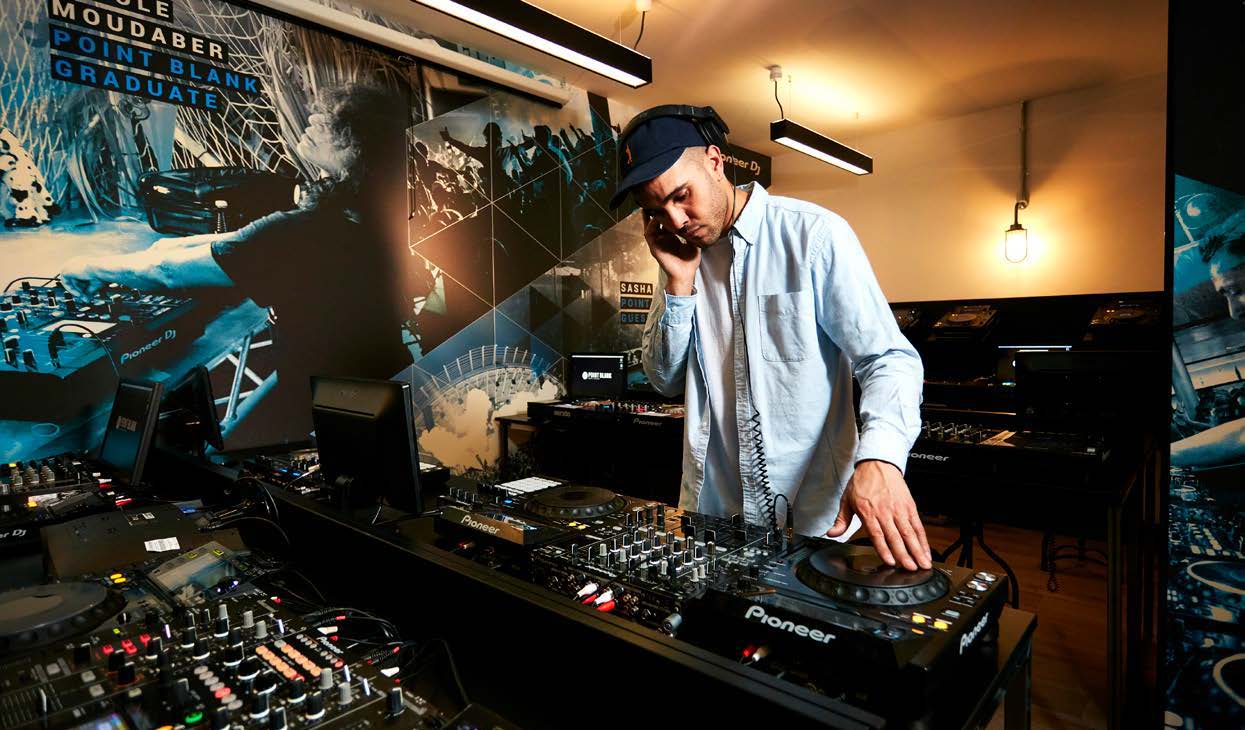
The track is built through rhythm, synthesis, samples, programming, sound design and detailed work inside a DAW. It requires a systematic ear, fluency in the language of the genre and the discipline to finish an arrangement rather than stop at an impressive eight-bar loop.
Vocal producer
A vocal producer helps a performer find the right delivery, phrasing and emotional focus, organises the recording, selects takes and ensures that technical precision does not erase a living performance. The work calls for musical judgement, psychological sensitivity and a deep understanding of the voice.
Music producer for media
This route works with briefs, narrative and exact contexts: film, television, advertising, games, podcasts and digital products. The portfolio must show more than beautiful music; it should prove that you can solve a defined problem within real constraints.
The music producer skills that matter in 2027
A strong producer is not necessarily the best instrumentalist or most technical engineer in the room. The advantage lies in combining several kinds of competence.
Musical skills
- critical listening and the ability to break a reference track into its components;
- a feel for rhythm, form, harmony, melody and tension;
- song arrangement and control of musical dynamics;
- enough music theory to communicate decisions quickly;
- the ability to hear the potential in an unpolished demo.
Technical skills
- confident work in one digital audio workstation;
- audio recording and editing;
- the fundamentals of microphones, levels and signal routing;
- synthesis, sampling and sound design;
- basic music mixing and the judgement to know when a dedicated engineer is needed;
- correct preparation of files, versions, stems and material for mastering.
People skills
- asking precise questions and genuinely listening to the answer;
- giving professional feedback without humiliating the person receiving it;
- explaining a technical decision in language everyone can understand;
- remaining calm in a difficult session;
- documenting roles, agreements and writing contributions honestly;
- respecting an artist’s boundaries and creating a safe working environment.
Professional skills
- planning time, budget and project stages;
- maintaining backups and a clear file-naming system;
- understanding music copyright, sound-recording rights and the basic logic of licensing;
- preparing music-release metadata;
- presenting work without exaggeration;
- building a professional music network through reliable collaboration rather than mass-messaging strangers.
Do music producers need a degree
Not always in formal terms. In practical terms, you do need an environment in which you create a great deal, receive informed criticism and learn to see your blind spots. It is possible to build some of that environment independently, but beginners cannot always distinguish a gap in knowledge from a question of taste.
Higher education or another structured programme is particularly valuable when you need:
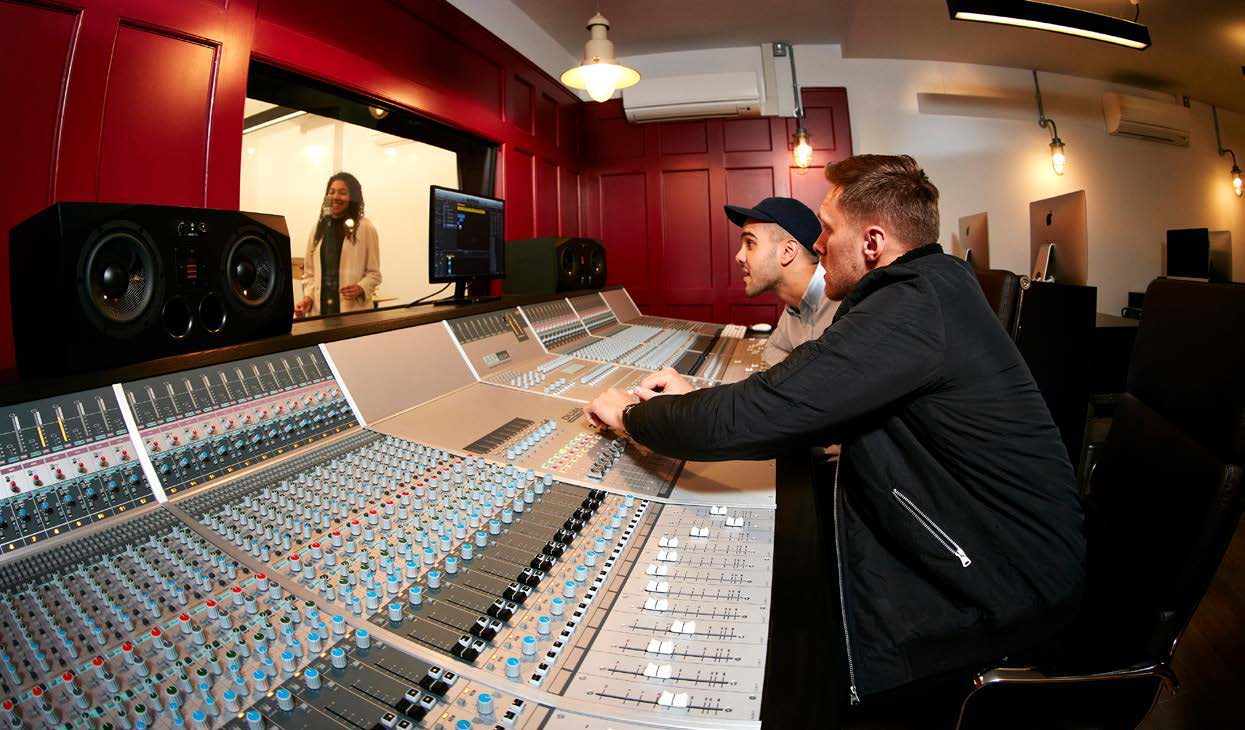
- regular access to professional studios and different monitoring systems;
- a sequence that develops from fundamentals to complex projects;
- tutors who can explain not only how something works but why;
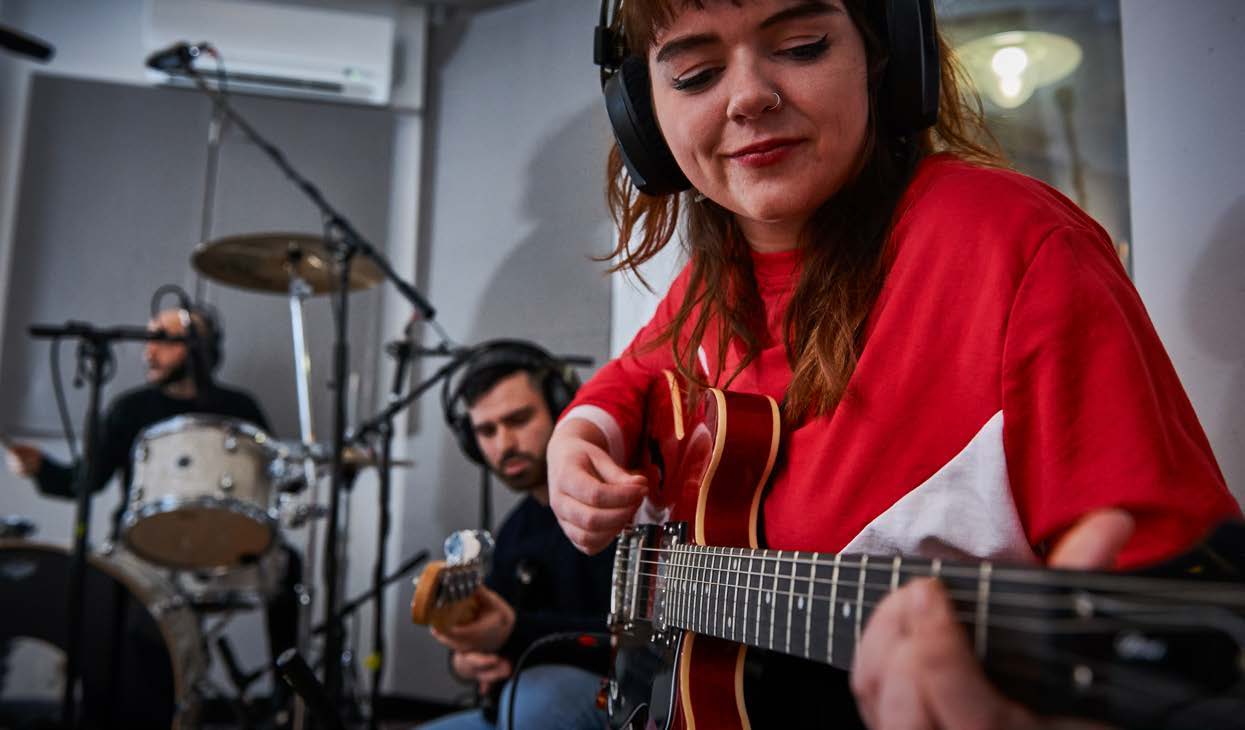
- a community of vocalists, writers, musicians, producers and engineers;
- firm deadlines, assessment and the habit of finishing work;
- a professional portfolio rather than a random folder of home experiments;
- an understanding of the music business, rights, branding, entrepreneurship and career models.
A degree does not automatically make someone a producer. A weak course can leave a graduate with theory, debt and too little convincing work. The useful question is not “does a music producer need a degree?” but “which tangible outcomes will this education help me create?”
Self-teaching, a short course or a music production degree
| Format | Strengths | Risks | Best suited to |
|---|---|---|---|
| Self-directed learning | flexibility, a low initial budget and freedom over genre and pace | fragmented gaps, limited critique, endless drafts and a weak professional network | disciplined creators with access to mentors and collaborators |
| Short course | concentrated work on one skill or piece of software and rapid practice | narrow content, uneven quality and little time for a portfolio or team projects | people who know exactly which gap they need to close |
| One-year certificate | an intensive foundation, structured practice and a possible bridge to a higher level | a dense pace and less time for broad development | applicants who want to test the field or organise existing skills quickly |
| Bachelor’s degree in music production | progression, studios, a creative community, wider professional context, portfolio and qualification | a high total cost and the need to assess the curriculum closely | those seeking deep immersion and an international study environment |
Searches for “music production courses” often lead to programmes centred on one application’s interface. That can be useful, but knowing the buttons is not the same as producing music. Strong education develops judgement: why to change the form, how to prepare a vocalist, when to remove a part, how to organise files and what your contribution to a shared track actually means.
What a strong music production course should deliver
Read a curriculum as a promise of specific work. If it lists software but says little about recording, composition, arrangement, collaborative sessions, mixing, a professional portfolio and the music business, the programme may be too narrow.
Check whether the course covers:
- music production and composition;
- different styles and approaches to arrangement;
- recording voices and instruments;
- synthesis, sampling and sound design;
- editing, mixing and preparation for mastering;
- music for screen, games or other media;
- marketing, branding, rights and entrepreneurship;
- several substantial completed projects;
- individual and group feedback;
- a professional portfolio module towards the end of the course.
In 2026, the UK National Careers Service described several routes into related studio work: university, college, an apprenticeship and progression from an assistant role. It is a useful principle. A strong route combines education with practical experience instead of treating the two as opposites.
Why studying music production in the UK attracts applicants
The United Kingdom has a dense ecosystem spanning recording, live music, publishing, management, advertising, film, games and music technology. According to UK Music, in 2024 the country’s music industry generated a record £8 billion in gross value added, £4.8 billion in export revenue and 220,000 full-time-equivalent jobs. These figures show the scale of the ecosystem; they do not guarantee employment for any individual graduate.
Studying music production in London is particularly attractive because studios, performers, labels, media companies, events and specialists are concentrated in one city. Prestige does not compensate for a weak curriculum, limited equipment access or an unaffordable budget. The decision should rest on learning outcomes, entry requirements, genuine practical experience and total cost.
For the wider map — from production to music business and audio programming — read GUGA’s published guide to studying music abroad in 2027.
Point Blank Music School as a partner example of practice-led producer training
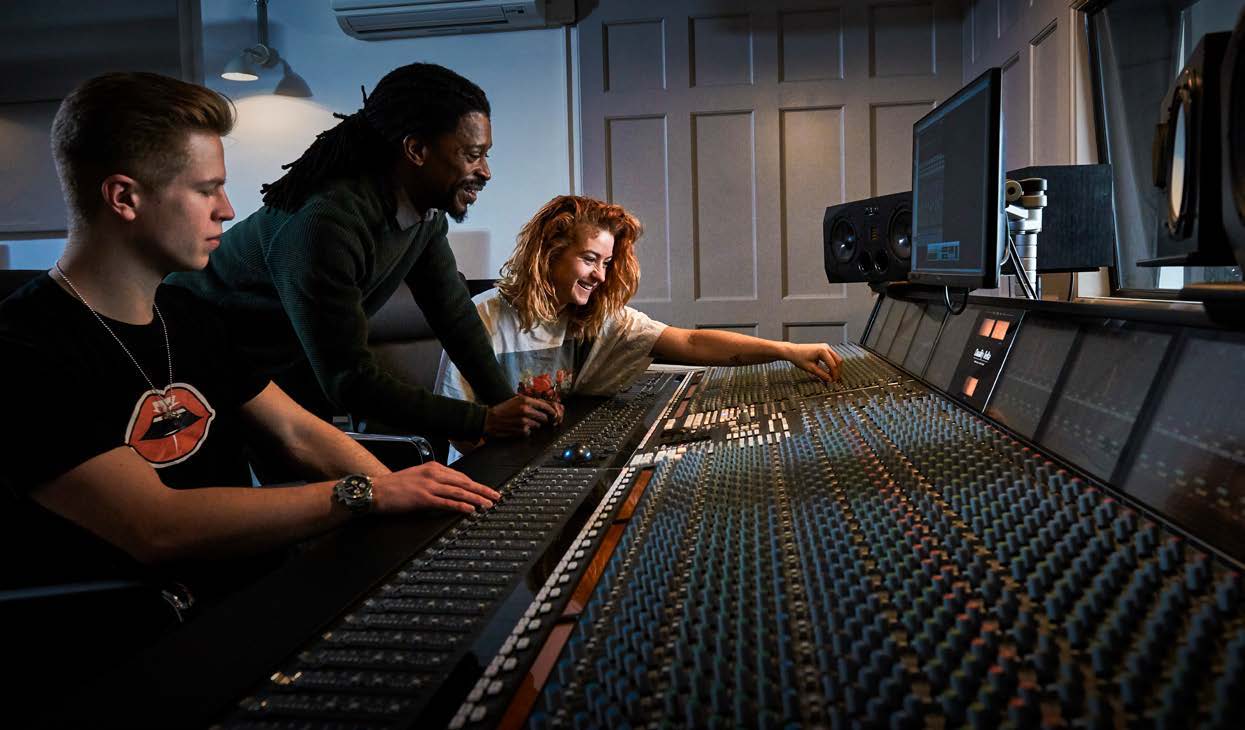
Point Blank Music School is a GUGA Education partner and a specialist music institution in London. Its Music Production & Sound Engineering degree illustrates how a practical bachelor’s course can be structured: production, composition, sound design, music industry practice and recording engineering, followed by creative remixing, music for media, mixing, marketing, mastering, game audio, a professional portfolio and music entrepreneurship.
As checked on 19 August 2026, the official course page listed a three-year format and an accelerated two-year option. For the three-year route, starts were shown for 11 January, 12 April and 4 October 2027. The typical academic offer was 112 UCAS points, while the international tuition fee for the 2026/27 academic year was listed as £15,750 per year. These details can change. Before an application, GUGA rechecks the exact format, date, fee, conditions and suitability for the intended visa route.
Fit matters more than the institution’s name. Someone who only wants to make beats at home may not need the same route as a future studio producer, vocal producer or composer for games. GUGA first analyses the applicant’s experience and work, then recommends an appropriate programme and organises the application.
Applying for music production: what admissions teams assess
A strong application does not invent the persona of a “future star”. It shows an ability to learn, finish creative work and explain decisions. For the partner bachelor’s degree discussed above, as checked on 19 August 2026, applicants needed a personal statement; an audition was not listed as compulsory for Music Production & Sound Engineering. Academic results, examples of work, references and relevant experience may all be considered.
For applicants presenting Ukrainian qualifications, the published criteria distinguish between preparatory and direct-entry routes. The Certificate of Complete General Secondary Education on its own may be considered for a bachelor’s degree with a Foundation Year. Direct entry was described as the certificate plus either a one-year UK foundation programme or one successful year at a recognised university. The stated English benchmark was IELTS Academic 6.0 overall with no component below 5.5, or another approved test. Requirements must be checked for the applicant, qualification system and year in question.
An application will usually require preparation of:
- academic records and certified translations;
- a personal statement or motivation essay;
- a reference;
- examples of musical work;
- proof of English;
- passport, financial and visa documents;
- an honest account of your role in every collaborative project.
Useful GUGA resources include documents required to study abroad and writing a motivation letter for an international university.
A music producer portfolio: what should persuade rather than merely impress
A music producer portfolio is a curated body of finished evidence. It should help the listener understand the decisions you made, what you completed yourself, how you worked with other people and whether you can lead material to a final form.
A strong portfolio for a music production application might include:
- three or four contrasting finished tracks;
- one collaboration with a vocalist, writer or musician;
- a short response to a brief, such as music for a scene, game or short video;
- one process example showing an early demo, the decisive changes and the final version;
- a concise explanation of your role, tools and principal creative decision for every piece;
- accurate credits for all co-writers and performers;
- links that open without an access request and reveal no unnecessary personal information.
Do not disguise weak composition with loudness or dozens of effects. Do not submit ten nearly identical beats. Never claim a recording, mix or performance completed by somebody else as your own. Transparency is a professional advantage, not a weakness.
GUGA can audit the portfolio: select the strongest work, shape its order, identify a stylistic or technical gap, edit the accompanying explanations and plan one new project where evidence is missing. We do not create the music for the applicant. The admissions team must hear the applicant’s genuine level and potential.
A practical portfolio matrix: five projects instead of fifty unfinished drafts
| Project | What it proves | What to explain |
|---|---|---|
| An original track | musical identity, form and sound choices | why you pursued this idea and which decision was hardest |
| A contrasting track in another aesthetic | flexibility and the ability to work beyond one formula | what you deliberately changed in rhythm, harmony or texture |
| Work with a vocalist | communication, recording, editing and respect for the artist | how roles were divided and how you improved the delivery |
| A project responding to a brief | discipline, deadlines and problem-solving | which constraints were set and how you answered them |
| A reworked older track | the ability to hear criticism and recognise your own development | what changed between versions and why |
Every project should pass through four states: concept, working version, external feedback and completion. The final transition is often what separates an emerging producer from someone who only experiments.
Does a beginner music producer need an expensive home studio
No. A dependable computer, one DAW, reliable headphones, an entry-level controller if useful and a quiet place to work are enough to begin. An audio interface and microphone become important when you are genuinely recording voices or instruments. Studio monitors make sense only alongside an understanding of the room’s acoustics.
A common mistake is buying equipment to postpone finishing music. An expensive compressor will not repair weak song form, and an enormous sound library cannot replace careful selection. It is often wiser to invest in listening, deliberate practice, informed critique and experience in a properly configured studio.
Which music production software should you choose? The one that lets you realise an idea quickly and is actually used on the course you are considering. Ableton Live, Logic Pro, Pro Tools and other environments have different workflows, but none produces a professional result without musical judgement. Strong producers transfer principles between tools.
A 12-month development plan: from the first session to an application
Months 1–2: foundations and discipline
Choose one DAW, finish two short tracks, begin a decision log and critically analyse one piece of music every day. Do not try to master every plug-in. Learn editing, automation, routing and the fundamentals of rhythm, harmony and form.
Months 3–4: recording and arrangement
Record a voice or instrument, build a complete arrangement, and learn to prepare a session and name files consistently. Ask two people for specific feedback using questions you have prepared in advance.
Months 5–6: the first collaboration
Complete a project with another writer or performer. Agree roles, deadlines, authorship and file exchange before starting. After the session, record what worked in the communication and what got in the way.
Months 7–8: expand your range
Finish a piece in another aesthetic or in response to a brief. Create a short cue for media, produce a remix only with appropriate permission, or revisit one of your own tracks. Check whether the portfolio shows more than one technique.
Months 9–10: edit the portfolio
Choose your five strongest projects, address obvious weaknesses, prepare credits and write concise descriptions. Do not revise everything indefinitely; define what “finished” means.
Months 11–12: application and professional presentation
Match the portfolio to each course’s requirements, prepare the personal statement, reference, translations, language test and financial plan. Test every link on another device and ask an independent reader to review the complete package as an admissions team would.
How to find your first collaborations without mass spam
Professional relationships rarely begin with “let’s make a hit”. A specific proposal is more persuasive: you have listened to a local artist’s demo, can explain one relevant idea, respect their identity and are willing to agree a small trial stage.
Good starting points include student teams, local musicians and writers, short films, podcasts, game prototypes and communities where people openly seek collaborators. Before the first session, agree:
- the aim and expected outcome;
- each participant’s responsibility;
- the deadline and number of revision rounds;
- writing shares and credits;
- whether the work will be released;
- whether it can appear in a portfolio;
- who keeps the final files and backups.
Reliability builds a reputation faster than aggressive self-promotion. A session prepared on time, close attention to the artist and an honest account of your role often lead to the next collaboration more naturally than a hundred identical messages.
How music producers make money — and why there is no single salary
A producer may charge a fixed project fee, a day or session rate, receive an agreed share of revenue, charge for arrangement or recording, and earn from original releases, music for media, teaching or related technical work. Early careers often combine several income sources.
There is no accurate universal figure for a “music producer salary”. Freelancing, working in a studio, producing an artist and holding a staff role at a media company all follow different models. Salary data for sound engineers or broadcast technicians cannot simply be transferred to producers. Personal income depends on the market, quality and reputation, contracts, volume of work and ownership of rights.
The global industry continues to grow: IFPI reported that worldwide recorded-music revenue reached US$31.7 billion in 2025, rising by 6.4% and marking an eleventh consecutive year of growth. That demonstrates the scale of the market, not freedom from competition, uneven incomes or the need for business skills.
Copyright, samples and credits: essential professional practice
In the United Kingdom, copyright in original musical works and sound recordings arises automatically; registration is not generally required for protection. Automatic protection does not remove the need to record who created the composition, lyrics, arrangement, recording and particular production elements.
For every project, keep:
- the date and creators of the original idea;
- file versions and each participant’s contributions;
- written agreement on writing shares;
- permission for any sample that you did not create or that lacks an appropriate licence;
- credits for performers, producer and engineers;
- terms governing use of the work in a portfolio;
- the final metadata version before release.
This section is not legal advice. Its purpose is to build the habit of discussing rights before a conflict forces the conversation.
Artificial intelligence in music production: the tool does not remove responsibility
In 2027, producers may use tools containing artificial intelligence to explore alternatives, clean recordings, assist with technical tasks or analyse material. The professional question is not simply “was AI used?” It is whether you had the right to use the inputs, understood the service terms, could explain your own contribution and avoided misleading the listener or an admissions team.
In its 2026 report, IFPI placed particular emphasis on licensing models that respect artists’ rights and on fraud involving artificial streaming. The lesson for an emerging producer is straightforward: technological speed does not replace authorship, permission, taste or professional ethics. A portfolio should disclose any significant use of generative tools clearly.
The UK Student visa and paid work in music
Studying music production abroad requires a separate analysis of immigration rules. As at 3 August 2026, the Student route allowed students on eligible full-time courses at degree level or above with an appropriate sponsor to work up to 20 hours per week during term and full-time outside term. It generally prohibited self-employment, business activity and work as a professional entertainer. Assessed work placements may be permitted when they are an integral part of the course and meet the relevant conditions.
Future production fees, independent releases, performances or freelance work should therefore never be treated as guaranteed income in a student budget. Before undertaking any paid activity, check the current rules, the conditions attached to the individual visa and the institution’s position. GUGA can organise the education and application timeline but does not replace a regulated immigration adviser.
The basic route is explained in GUGA’s guide to a student visa for studying abroad.
How to compare two music production courses
| Criterion | The exact question to ask |
|---|---|
| Outcomes | which finished pieces will appear in my portfolio after each year |
| Academic balance | how much composition, production, recording, mixing, business and artist development the curriculum contains |
| Studio access | how studios are booked, whether a workstation is guaranteed and what is available outside class |
| Teaching staff | whether tutors have current professional experience in my particular field |
| Feedback | how often I receive it, from whom and against which criteria |
| Collaboration | whether there are genuine projects with vocalists, writers, engineers and music-business students |
| Rights and careers | whether contracts, credits, metadata, professional presentation and entrepreneurship are taught |
| Admissions | whether the course requires a portfolio, personal statement, interview, audition or Foundation Year |
| Recognition | who awards the qualification and which current regulatory confirmations the institution holds |
| Visa | whether the format is compatible with the required student route and work-placement rules |
| Total cost | tuition, accommodation, equipment, charges, travel, insurance and a contingency reserve |
| Personal fit | whether the course addresses my specific gaps rather than merely having an attractive title |
Do not choose a music production school in London from studio photographs or a list of famous alumni alone. Ask to see the project structure, assessment system, actual access to equipment and rules governing portfolio use. The goal is not to enter a beautiful building; it is to leave as a stronger producer.
How GUGA Education helps future music producers
GUGA builds an application around the real candidate rather than a universal package. Support may include:
- diagnosing the direction: artist-producer, studio production, vocal production, music for media or an adjacent route;
- selecting courses by curriculum, format, budget and visa suitability;
- rechecking current requirements, dates, fees and documents;
- building a schedule for English, portfolio development and applications;
- auditing musical work and the honest description of the applicant’s contribution;
- editing the personal statement without templates or invented achievements;
- organising academic documents, translations and references;
- completing a technical application check before submission;
- planning the next steps after an offer.
If an applicant has no finished tracks yet, that is not a reason to fill an application with weak material. GUGA can build a realistic development plan and help decide whether to apply for direct bachelor’s entry, a Foundation Year, a one-year programme or strengthen the fundamentals first.
Book an admissions consultation to begin with an assessment of your work, experience and professional goal.
Frequently asked questions about becoming a music producer
Can I become a music producer without attending music school
Yes. Classical music school is not a universal requirement, but you still need to develop listening, rhythm, form, arrangement and technical skills systematically. A strong contemporary course may assess practical work, motivation and potential more broadly than formal classical training.
Does a music producer need to play an instrument
Not necessarily at concert level. Basic keyboard or instrumental ability can accelerate harmonic exploration and communication, but a producer is defined by the quality of musical decisions and the ability to bring a recording together, not by performance virtuosity.
How should I start producing music at home
Choose one DAW, finish several short tracks, analyse reference music, learn to organise a session and seek specific feedback. Do not begin with a large equipment purchase.
How long does it take to become a music producer
There is no single timescale. A year of consistent practice can produce a convincing early portfolio, but professional ability develops through many completed projects, collaborations, mistakes and responsibility for the outcome.
How many tracks do I need in a music production portfolio
Three to five strong, contrasting pieces with a clear explanation of your role are often enough for an initial portfolio. Exact requirements vary by course. Quality, completion and transparency matter more than quantity.
Can I apply for music production without finished tracks
Sometimes a formal portfolio is not compulsory, and admission may rely on academic documents, a personal statement and experience. Finished work nevertheless strengthens your presentation considerably and helps you test whether a practice-led subject genuinely suits you.
Is an audition required for music production
Not on every course. For the partner Music Production & Sound Engineering degree, an audition was not listed as compulsory as at 19 August 2026, while vocal routes may require one. Always check the specific course.
What do students learn on a music production degree
Strong courses can combine production, composition, arrangement, sound design, recording, mixing, mastering, music for media, a professional portfolio, marketing, rights and entrepreneurship. Module names and the balance between them vary.
Do I need an expensive studio to build a strong portfolio
No. Early work can be created with accessible equipment when composition, arrangement and judgement are strong. A professional studio becomes valuable for high-quality recording, detailed monitoring, collaborative practice and experience with equipment unavailable at home.
How does a new music producer find the first clients
Start with small collaborations in which you can offer a specific benefit and keep your promise. Show relevant work, respect the artist’s identity, agree roles and rights, and avoid sending mass, impersonal pitches.
Does a music production degree guarantee a job in the music industry
No. A degree can provide structure, studios, practice, relationships and feedback, but employment depends on your portfolio, craft, reputation, professional behaviour, right to work and the market.
Can an international student work as a music producer in the UK
Do not assume that any paid freelance activity is permitted. Current Student route rules generally limit hours of employed work and prohibit self-employment and work as a professional entertainer, subject to narrow exceptions. Check the conditions of the individual visa before beginning any activity.
Conclusion: producers are made through decisions, not equipment purchases
A music producer is someone who can be trusted with an unfinished idea and deliver a coherent result. That takes more than taste and technology. It requires discipline, empathy, musical thinking, professional habits and the ability to work through uncertainty.
The best first step is to finish one modest track and record honestly what was missing: composition, recording, arrangement, technical control, criticism, collaborators or structure. That gap will tell you which kind of music producer training would be genuinely valuable.
GUGA Education can turn the diagnosis into a credible route: selecting a course, checking entry conditions, preparing a portfolio and documents, and planning English, budget and deadlines. Discuss your route with GUGA if you want to build a career around work that can genuinely be heard and assessed, rather than a myth of instant success.
Sources and currency of information
Facts were checked on 19 August 2026 against official Point Blank Music School materials for 2026–2027, current course and admissions pages, IFPI’s Global Music Report 2026, UK Music’s This Is Music 2025, the UK National Careers Service profile for studio sound engineers, UK government guidance on copyright, Immigration Rules Appendix Student and the US Bureau of Labor Statistics Occupational Outlook Handbook. Direct links to the partner institution are deliberately not included: GUGA checks current options and conditions with each applicant.
Start dates, tuition fees, admissions rules, language requirements, visa conditions and professional opportunities can change. Recheck the official conditions of the specific course and the applicant’s personal circumstances before making a decision.