
Who this route is for
A vocalist who wants to record and shape their own material rather than depend entirely on a producer.
Point Blank London · voice in the studio and on stage
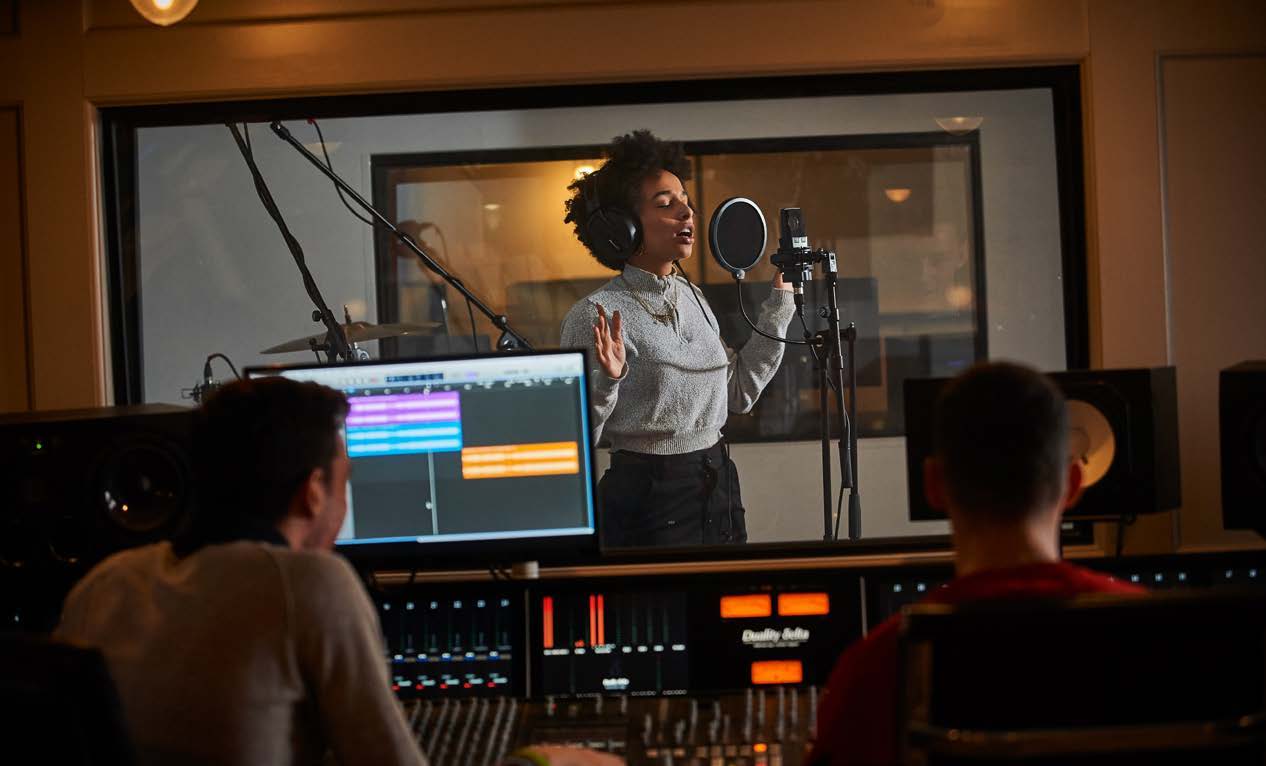
Music Production & Vocal Performance is designed for singers who want greater control over how their voice is written, recorded, produced and presented. It joins vocal technique and musicianship with production, engineering, songwriting, live performance and a final showcase, making it different from a performance-only route.
 Independent guidance by GUGA
A vocalist who wants to record and shape their own material rather than depend entirely on a producer.
The current audition format, repertoire, technical rules, deadline and how the creative assessment fits the academic application.
GUGA Education can verify the current audition route, compare the degree formats, review how your vocal and production evidence work together, and coordinate the wider application.
Applicants can choose a three-year BA, a two-year accelerated BA or a one-year CertHE within this audition-based family. Alongside two weekly classes, the timetable allows for vocal practice and independent study.
Typical timetable: Two classes per week, plus vocal practice and independent study
| Qualification | Duration | Mode | UCAS code | Home fee / year | International fee / year |
|---|---|---|---|---|---|
| BA (Hons) Music Production & Vocal Performance | 3 years | Standard | VP3Y | £9,790 | £15,750 |
| BA (Hons) Music Production & Vocal Performance | 2 years | Accelerated | VPY2 | £11,750 | £16,500 |
| CertHE Music Production & Vocal Performance | 1 year | Standard | VPC1 | £9,790 | £15,750 |
This GUGA guide uses the partner prospectus and current published programme information. Details can change; GUGA rechecks the applicant’s chosen route before submission.
Module titles are indicative and can change. GUGA checks the current structure before an application is submitted.
This family includes a three-year BA (Hons), a two-year accelerated BA (Hons) and a one-year CertHE, and it is marked as an audition route. Academic and English evidence still apply alongside the creative assessment. Confirm the exact audition brief, recording format, repertoire, dates and technical rules for the chosen award before preparing material.
The published standard degree-entry benchmark is 112 UCAS points, A Levels BBC or BTEC DMM, plus GCSE English at 4/C. Other routes can be accepted, so GUGA checks the equivalency of your education separately.
Creative audition: the vocal route involves performance assessment; confirm the exact format and material for the relevant intake.
The published benchmark is IELTS for UKVI Academic 6.0 overall with at least 5.5 in each component. CertHE applicants using the Student Visa route may need an approved SELT. GUGA checks your specific case rather than applying one threshold to everyone.
Build evidence around the natural voice, not studio camouflage: contrasting performances suited to your range, one studio example, and an original or collaborative piece that makes your contribution clear. Keep production clean enough to assess the voice, credit writers and producers, and follow the current audition instructions even when your preferred presentation differs.
Published tuition is only one part of the budget. Accommodation, travel, equipment, software, immigration and personal costs can be separate.
Information checked 1 September 2026. Before submission, we recheck fee status, the current amount, any deposit and payment timing.
The combination can support development towards recording-artist, singer-songwriter, session-vocal, vocal-production, coaching or music-production work. Sustainable technique, reliable preparation, strong credits and a body of finished performance evidence remain essential; study does not guarantee an artist career.
These are possible directions, not promised outcomes. Experience, portfolio quality, network and location all affect employability.
These articles answer broader questions about subject choice and career direction. This page remains the source for exact programme-specific facts.
Yes, this programme family is flagged as requiring an audition. The exact repertoire, number of pieces, live or recorded format and deadline must be verified for the selected award and intake.
No. The module sequence includes production, composition, engineering, mixing and electronic performance alongside vocal musicianship, studio and live vocal work. Compare the balance carefully if you want a performance-first conservatoire route.
The current brief takes precedence. As a preparation principle, the recording should allow assessors to hear intonation, timing, tone and response without processing that misrepresents the performance.
A two-year accelerated BA is listed alongside the standard three-year BA and CertHE. The compressed pace leaves less time for gradual vocal and portfolio development, so workload and readiness deserve particular scrutiny.
The verified family lists October 2026, April 2027 and October 2027. Availability and audition timing may differ by intake, so confirm both the course date and the creative-assessment calendar.
GUGA Education
GUGA Education can verify the current audition route, compare the degree formats, review how your vocal and production evidence work together, and coordinate the wider application.
No external university link is needed: GUGA checks programme fit, academic and English documents, portfolio or audition evidence, the current deadline, fee status and full budget, then coordinates submission.
Editorial source note. Point Blank states that it holds Full Degree Awarding Powers and awards qualifications subject to internal validation. This GUGA guide uses the partner prospectus and current published programme information. Details can change; GUGA rechecks the applicant’s chosen route before submission.